

Key Takeaways
- Belt bags (also called fanny packs or waist bags) sit around your waist with 1–3 liters of compact storage, perfect for high-movement activities and quick access to essentials.
- Sling bags wear diagonally across your body with 3–8 liters of capacity, offering more storage space and organizational compartments for day trips and urban exploration.
- Belt bags provide better stability during running or cycling, while sling bags offer superior accessibility since you can swing them from back to front without removal.
- For theft-prone destinations, belt bags can be hidden under clothing for deep security, but sling bags with RFID protection and anti-theft features provide better everyday security while remaining accessible.
- Concept Global's Travel Sling Bags combine the best features of both styles: compact enough for hands-free convenience with enough capacity for all your travel essentials, plus military-grade RFID protection.
Why Choosing the Right Carry Bag Matters for Travel
You’re at the airport, coffee in one hand, luggage in the other, digging for your boarding pass. Or maybe you’re exploring a busy market, keeping one eye on your wallet. It’s stressful, right?
The right travel bag changes that completely. It keeps your essentials close, your hands free, and your focus where it should be: on the trip itself. Sling bags and belt bags both make travel easier, but each works best for different situations and styles. Pick the wrong one, and you’ll spend your trip wrestling with your bag instead of enjoying the moment.
Modern travelers need quick access to what matters while keeping everything safe. That’s why finding the right carry bag can make every journey smoother and way more enjoyable.
|
Modern Anti-Theft Sling Bags for Smart Travelers. High-Quality Basics Without the Hype Tax! Upgrade from bulky backpacks to sleek, secure sling bags with RFID protection and anti-theft features. Join 100,000+ customers who trust our travel solutions. Smart Security Features:
Why Choose Concept Global:
60-Day Money-Back Guarantee: Not satisfied? Full refund, no questions asked. |

What's the Difference? Sling Bag vs Belt Bag Explained
Sling bags and belt bags may seem similar, but their designs serve different purposes.
A belt bag, also known as a fanny pack or waist bag, fits around your waist or hips using an adjustable strap and buckle. It offers quick front access to your essentials and stays secure during movement, making it popular for travel, running, and festivals.
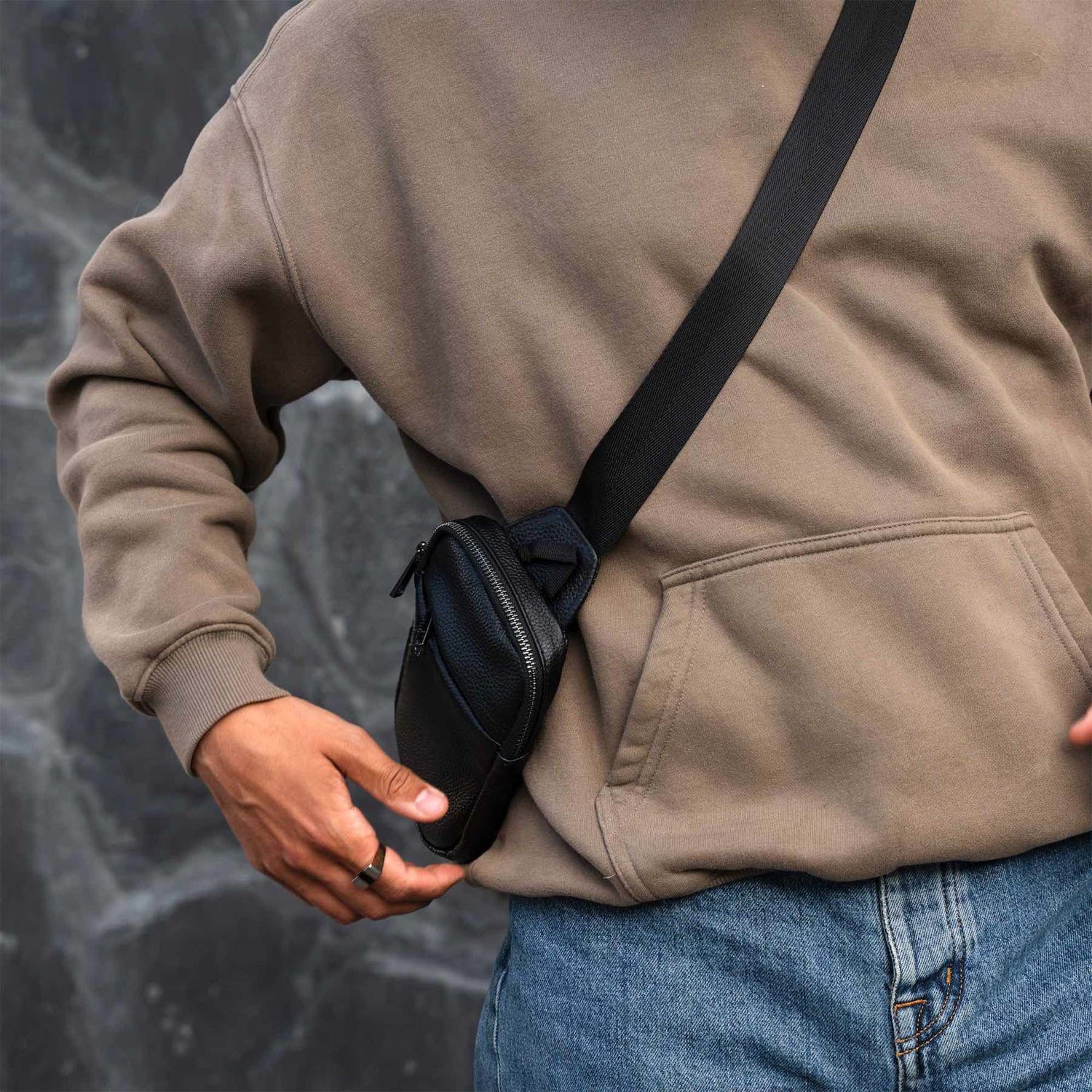
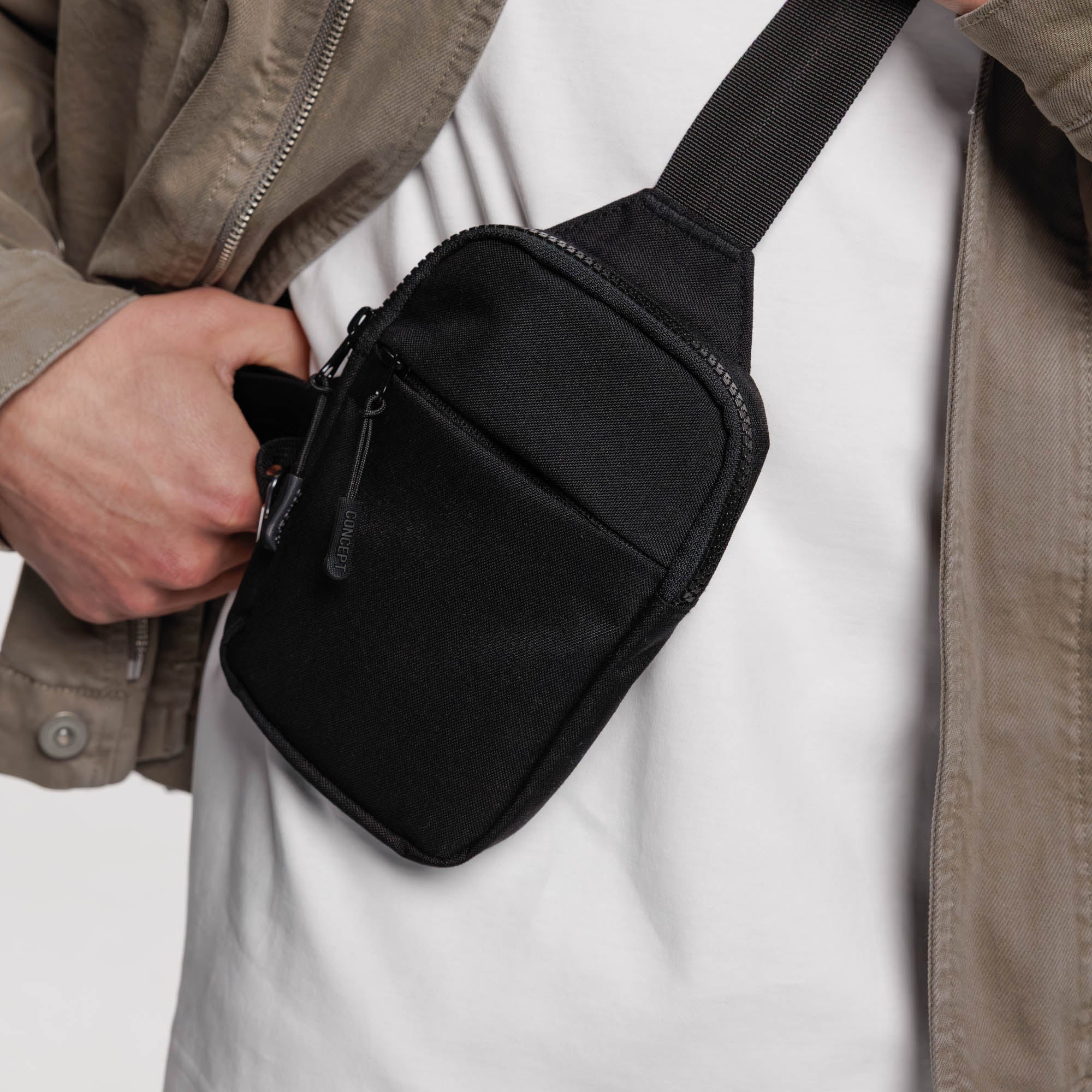
A sling bag is worn diagonally across the body with a single strap, resting on the back or hip. It can easily rotate to the front for quick access to items like your phone, wallet, or keys.
The main difference lies in positioning. Belt bags stay fixed around the waist, while sling bags offer flexible wear across the front, back, or side.
Sling Bags for Travel: Pros and Cons

A travel sling packs more than a belt bag, swings forward in seconds, and keeps your essentials sorted for all-day exploring.
Pros
1. More Storage Capacity: Sling bags typically range from 3 to 8 liters, enough to carry a small tablet, water bottle, compact umbrella, and additional accessories. That's nearly triple what most belt bags hold, making them perfect for day trips where you need more than just the basics.
2. Better Organization: Multiple zippered compartments, including main storage, quick-access front pockets, interior mesh organizers, and sometimes side bottle or tripod holders mean you're not digging through one big pouch to find your lip balm.
3. Quick Accessibility: Here's where sling bags shine. Their defining feature is mobility; you can swing them from back to front without removing them, so accessing your camera for that perfect shot takes seconds, not minutes.
4. Versatile Wearing Options: Wear it on your chest in crowded areas for security, swing it to your back when you need freedom of movement, or position it on your hip for a casual look. One bag, multiple styles.
Cons
1. Uneven Weight Distribution: Carrying weight on one shoulder can lead to posture imbalance and shoulder fatigue over extended use. If you're planning an all-day museum marathon, you'll definitely feel it by evening.
2. Less Stable During High Movement: Without stabilization straps, the bag can bounce or slide during running or rapid movement, requiring frequent readjustment. Not ideal if you're chasing a departing train!
3. Potential Security Exposure: Swinging the bag around to access contents exposes the back or side to onlookers, increasing pickpocket risk in crowded environments. That momentary exposure could be all a skilled thief needs.
Belt Bags for Travel: Pros and Cons

Belt bags keep essentials close and steady, great in crowds or on the move, but they hold less, get warm against the body, and often come off at airport security.
Pros
1. Maximum Stability: Belt bags hug the hips, eliminating swing and bounce. Runners and cyclists love this because the bag stays exactly where you put it, even during intense activity.
2. Concealable Security: Belt bags are designed to sit close to the skin, under clothing, making them perfect for carrying passports and emergency cash where thieves can't see them. It's deep security that's completely invisible.
3. Balanced Weight: Since the strap wraps completely around your waist, the weight distributes evenly rather than pulling on one shoulder. Much better for your posture during extended wear.
4. Quick Front Access: Worn at the front hip, belt bags keep valuables in sight and within immediate reach; key in dense crowds where pickpocketing risks rise. No reaching behind your back or swinging bags around.
Cons
1. Limited Capacity: Belt bags typically hold between 1 and 3 liters, accommodating essentials like a phone, wallet, keys, and small items. Forget about carrying a water bottle or extra layer.
2. Can Be Hot and Uncomfortable: Belt bags sit close to the skin and need to be fastened tightly, which can be constricting and hot if you're somewhere tropical. That snug fit becomes sweaty and uncomfortable fast.
3. Less Organizational Space: Often just one main zippered compartment with one or two smaller pockets. Everything gets jumbled together, making it harder to find what you need quickly.
4. Airport Security Hassle: You'll likely need to take off your belt bag when passing through airport security gates for scanning or hand-checking, adding extra steps to an already stressful process.
Head-to-Head Comparison: Sling Bag vs. Belt Bag
|
Feature |
Sling Bag |
Belt Bag |
|
Capacity |
3–8 liters (tablets, water bottles, umbrellas) |
1–3 liters (phone, wallet, keys only) |
|
Wearing Position |
Diagonal across body (chest, back, or hip) |
Around waist or hips |
|
Security |
RFID pockets, anti-theft zippers, visible deterrent |
Can be hidden under clothing, front-facing control |
|
Comfort |
One-shoulder fatigue after 4–6 hours |
Even weight distribution, but can be hot/sweaty |
|
Movement Stability |
May bounce during running/cycling |
Stays firmly in place during high activity |
|
Access Speed |
Swing from back to front in seconds |
Already front-facing for instant access |
|
Organization |
Multiple compartments and pockets |
Usually 1–2 compartments |
|
Style Versatility |
Modern, urban, adaptable look |
Sporty or retro, limited styling options |
|
Best For |
City exploring, day trips, casual travel |
Running, festivals, deep security storage |
Why Concept Global's Travel Sling Bags Offer the Best of Both Worlds
You shouldn't have to choose between security and convenience, or between capacity and comfort. That's the thinking behind Concept Global's approach to travel sling bags.
Our Travel Sling Bags combine the compact, hands-free convenience of a belt bag with the superior storage and organization of a sling bag. You get military-grade RFID-blocking technology that prevents scammers from lifting your personal information and making unauthorized payments, something many belt bags lack entirely.
Our design features adjustable straps that keep the bag snug against your body, anti-theft lockable zippers that deter pickpockets, and enough organizational pockets that you won't waste time searching for your boarding pass.
We've also solved the comfort problem. Unlike belt bags that get sweaty against bare skin or traditional sling bags that dig into your shoulder, our breathable materials and ergonomic strap design mean you can wear your bag comfortably all day long, whether you're rushing through airports or strolling through markets.
With over 200,000 items sold worldwide, our sling bags have proven themselves in real-world conditions from European cobblestones to Asian night markets. The 60-day money-back guarantee means you can test it on your own adventures risk-free.
Browse our collection of anti-theft travel sling bags!
Frequently Asked Questions (FAQ)
Can I wear a sling bag like a belt bag around my waist?
Some sling bags have adjustable straps long enough to wear around the waist, but they're designed differently. Sling bags typically have a single diagonal strap optimized for shoulder wear, while belt bags have shorter straps specifically made for waist positioning. You can try it, but you'll get better results using each bag as intended.
Will a belt bag fit my larger phone and modern wallet?
This is a growing problem. Belt bags typically hold 1-3 liters, which can be tight for today's oversized smartphones and bulky wallets. Check the dimensions carefully—many belt bags were designed before phones got so big. Sling bags generally offer more flexibility with their 3-8 liter capacity and can accommodate modern devices comfortably.
How do I stop a sling bag from bouncing when I walk or run?
Tighten the strap so the bag sits snug against your body rather than hanging loose. Position the bag on your chest or front hip rather than behind you for better stability. Also, don't overpack—heavy, unevenly distributed weight will always bounce more. If you're serious about running, a belt bag designed specifically for athletics will perform better.
Are sling bags or belt bags better for travel in Europe?
Sling bags are more popular in Europe right now and offer better capacity for day-long sightseeing. However, the real answer depends on your itinerary. For long museum days and city exploring, choose a sling bag. For outdoor activities like hiking in the Alps or cycling in Amsterdam, a belt bag's stability makes more sense. Many experienced travelers bring both and switch based on the day's activities.
Can I wear Concept Global's Travel Sling Bag comfortably all day while sightseeing?
Absolutely! Our ergonomic strap design and breathable materials prevent the shoulder fatigue and sweating issues common with other sling bags. The adjustable strap lets you find your perfect fit, and the lightweight construction (even when packed) means you can wear it for 8+ hours of city exploring without discomfort. Unlike belt bags that get hot against your skin, our sling sits away from your body for better airflow. Check out our collection today!



Leave a comment
This site is protected by hCaptcha and the hCaptcha Privacy Policy and Terms of Service apply.